From $5–$20/sq ft to $30,000+: Asbestos Abatement Costs in 2026
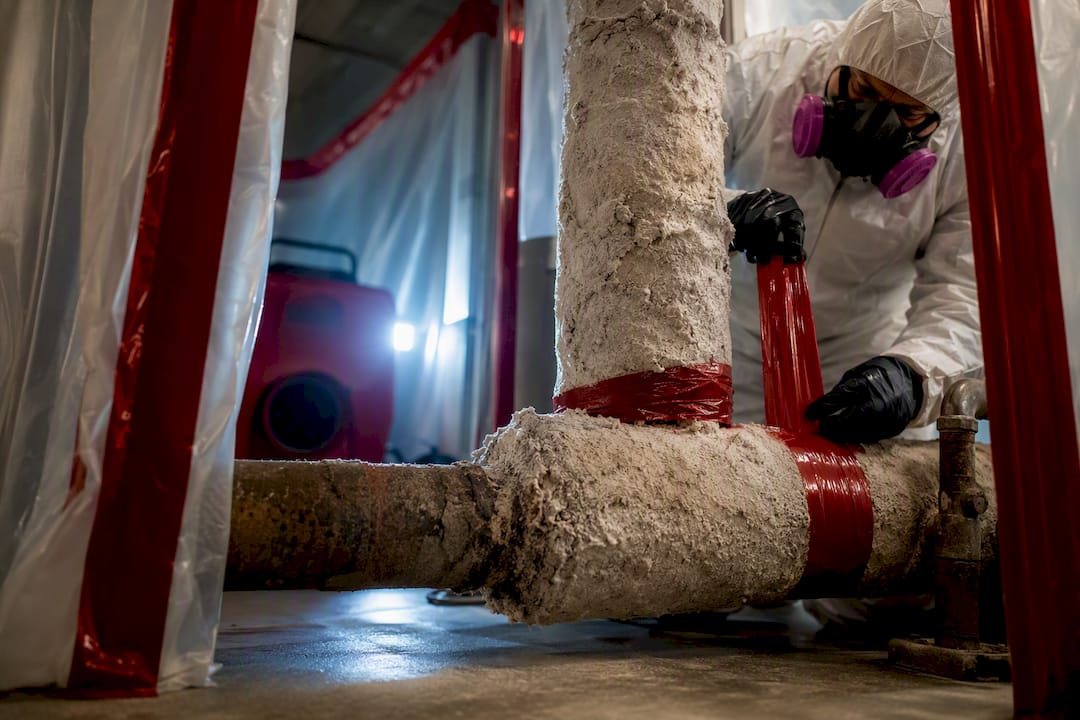
Most homeowners pay typical amounts for a single-area asbestos abatement job, according to This Old House, while whole-home projects with hazardous material throughout can climb higher. Certified labor, not the asbestos itself, drives most of that price. Get an independent inspection first, then collect three written, itemized quotes before you sign anything.
TL;DR:
- Costs for small asbestos jobs are often higher per square foot than large projects due to fixed setup, containment, and disposal fees.
- Prices vary widely depending on material condition, access difficulty, and local disposal logistics, making multiple bids essential for comparison.
- Labor and compliance requirements, including certified supervision and OSHA standards, constitute the largest portion of the abatement cost.
- A typical abatement process involves inspection, containment, removal, clearance testing, and waste disposal, often taking several days to weeks.
- Planning ahead allows for scheduling manageable quotes, avoiding emergency premiums, and integrating restoration costs into the overall project budget.
Table of Contents
- How Much Does Asbestos Abatement Cost by Job Type?
- Why Do Asbestos Removal Quotes Vary So Widely?
- What Does the Asbestos Abatement Process Look Like, Step by Step?
- What Testing and Paperwork Should You Budget For?
- What Hidden Costs Catch Homeowners Off Guard?
- How Do You Get Comparable Abatement Quotes?
- How a Certified Contractor Actually Budgets Abatement Work
- Emergency Removal vs. Planned Abatement: Why Timing Changes Price
- Why Most Abatement Advice Undersells the Restoration Bill
- Ready to Get a Certified Abatement Quote?
- Sources
How Much Does Asbestos Abatement Cost by Job Type?
Interior asbestos removal typically runs $5 to $20 per square foot, with some jobs stretching to $25 depending on material type and access, per InspectandTest. Pipe insulation and ductwork are usually priced per linear foot instead, since the material wraps around a run rather than covering a flat surface.
Here’s what that looks like on real jobs:
- Popcorn ceiling removal: $3 to $7 per square foot; a 500-square-foot ceiling often lands between $1,500 and $3,500.
- Vinyl floor tile and mastic: $2 to $6 per square foot, with small rooms frequently hitting the contractor’s minimum charge.
- Pipe insulation wrap: $6 to $15 per linear foot, depending on how many joints and elbows need hand removal.
- Siding (transite or cement-asbestos panels): $7 to $12 per square foot, higher when scaffolding or lift equipment is required.
- Roofing shingles containing asbestos: $8 to $15 per square foot, often bundled with tear-off labor.
- HVAC duct insulation: $10 to $25 per linear foot because of tight crawlspace or attic access.
- Whole-house abatement (multiple materials, multiple rooms): commonly $5,000 to $7,000 as a starting point, according to Angi, with severe cases exceeding $30,000, per InspectandTest.
Small jobs almost always cost more per square foot than large ones. A single 10 by 10 bathroom with asbestos tile can cost nearly as much as a 400-square-foot basement, because setup, containment, and disposal fees stay roughly fixed no matter the size of the room. Most contractors carry a common minimum charge to cover overhead, so small jobs do not necessarily mean small bills.
Why Do Asbestos Removal Quotes Vary So Widely?
Two bids for the same house can differ by thousands of dollars, and the gap usually traces back to four things: material condition, physical access, labor requirements, and disposal logistics.
Friable versus non-friable material is the biggest swing factor. Friable asbestos crumbles by hand and releases fibers into the air easily, which triggers stricter containment, full-face respirators, and negative-air pressure equipment. Non-friable material, like intact floor tile, can sometimes be removed with lighter controls. A friable pipe wrap job in a cramped mechanical room can cost more per square foot than a wide-open non-friable tile removal, even though the second job covers far more area.
Certified labor is the largest line item on almost every quote. Workers need state-specific training, supervisors need additional certification, and OSHA’s standards require documented exposure monitoring, respiratory protection, and decontamination procedures for the crew, according to OSHA. That training and oversight cost money regardless of how much material actually gets removed.
Beyond labor, expect these variables to move the price:
- Tight attics, crawlspaces, or multi-story access add setup time and equipment rental
- Demolition of surrounding drywall or flooring to reach the material adds a separate cost
- Distance to a permitted disposal facility affects hauling fees
- Local filing requirements and notification periods add administrative time
Pro Tip: Ask every bidder to separate their quote into labor, containment/equipment, and disposal. If one number looks unusually low, it’s almost always the labor line, and that’s exactly where you don’t want a shortcut.
What Does the Asbestos Abatement Process Look Like, Step by Step?
Most projects follow the same sequence, though the calendar time depends heavily on scope.
- Inspection and sampling (1 to 3 days): A licensed inspector collects samples and sends them to a lab; results typically return in 3 to 5 business days, though rush testing is available for a premium.
- Containment setup (half a day to 2 days): Crews seal off the work area with plastic sheeting, negative-air machines, and decontamination chambers.
- Active removal (1 day for a single room, 3 to 5 days for pipe runs through a whole house, 1 to 3 weeks for full-home projects with multiple material types).
- Clearance air testing (1 to 2 days for lab turnaround after sampling): An independent monitor confirms fiber counts are below re-occupancy limits.
- Waste transport and manifest filing: Waste ships to a permitted landfill with documentation confirming proper disposal.
A single bathroom tile job might wrap in 3 to 5 days start to finish. A whole-house project with popcorn ceilings, pipe wrap, and old flooring can easily run 3 to 4 weeks once you count inspection, removal, and clearance testing in sequence.
What Testing and Paperwork Should You Budget For?
Inspection and lab analysis typically cost a few hundred dollars, according to Angi, and is money worth spending even if a contractor offers to test for free. An inspector paid by the abatement company has a built-in incentive to find more work.
- Independent clearance air monitoring after removal, often required outright in stricter states like New York, according to Environmental Education Associates
- Waste manifests documenting the material’s path to a permitted disposal facility, a requirement under EPA rules
- Local permit or notification filing fees, which vary by county and state
- Documentation showing which threshold triggered mandatory professional abatement rather than DIY encapsulation
Some states set a low square-footage threshold that requires certified contractors even for tiny jobs; others allow homeowners to encapsulate small amounts themselves. Check your state’s rule before assuming a permit isn’t needed.
What Hidden Costs Catch Homeowners Off Guard?
Abatement removes the hazard. It doesn’t rebuild anything. Drywall, flooring, or roofing replacement is almost always billed separately, and on older homes that restoration bill can equal or exceed the abatement cost itself, according to Angi.
- Disposal surcharges per cubic yard at the landfill, which climb if the facility is far from the job site
- Insurance-driven jobs running 20 to 50% higher than a standard job because of the extra documentation and oversight insurers require, per Angi
- Discovery of additional asbestos once walls or ceilings are opened up, which is common in homes built before 1980
- Temporary housing or storage costs if the work area includes a kitchen or bathroom you can’t live without
Pro Tip: Ask your contractor for a “discovery allowance” line in the contract, a pre-agreed rate for additional material found mid-job. It won’t stop surprises, but it stops surprise pricing.
How Do You Get Comparable Abatement Quotes?
- Get an independent inspection before calling contractors, and hand every bidder the same lab report so they’re pricing identical scope.
- Require a written, itemized quote naming the certified supervisor, the disposal facility, and a line-item breakdown of labor, containment, and disposal.
- Confirm independent air monitoring and clearance testing are included, not billed as a surprise add-on after the work is done.
- Compare bids line by line, not just the bottom number. A quote that’s 40% cheaper than the others is usually missing something, most often proper disposal documentation or full-crew certification.
- Reject any bid that won’t name its disposal site. A contractor who can’t tell you where the waste is going can’t prove it went anywhere legal.
How a Certified Contractor Actually Budgets Abatement Work
Corneliuswrecking holds OSHA and asbestos abatement certifications, which lets us plan removal and restoration in one contract instead of two. Documented chain-of-custody, from certified crew credentials to disposal manifests, protects homeowners from liability if a job gets audited later. For anything beyond a single small room, a turnkey bid usually beats stacking two separate contractors.
Emergency Removal vs. Planned Abatement: Why Timing Changes Price
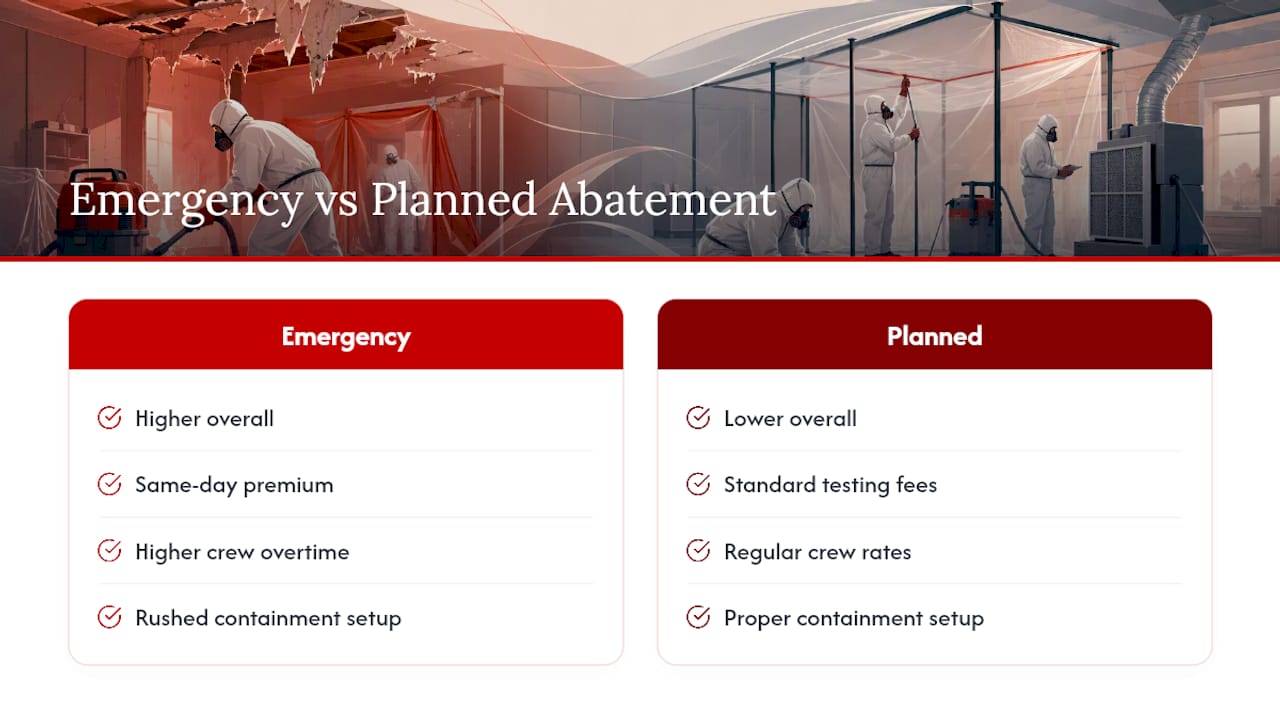
An emergency abatement job, triggered by a burst pipe that exposed old insulation, a collapsed ceiling, or a real estate closing deadline, almost always costs more than the identical job scheduled weeks out. Rush inspection and lab turnaround alone can add a same-day or 24-hour premium on top of standard testing fees. Contractors also charge more to pull a certified crew off another job or bring in overtime hours to hit a compressed timeline.
Containment work suffers the most under time pressure. Proper negative-air setup and multi-stage decontamination chambers take real hours to build correctly, and a rushed job increases the odds of a failed clearance test, which means paying for re-testing and possibly re-containment before anyone can move back in.
Planned abatement lets you shop three quotes, schedule around off-peak contractor availability, and coordinate restoration work to start the day removal finishes instead of waiting weeks for a second contractor’s schedule to open up. If you’re renovating, listing a home, or dealing with a known hazard that isn’t actively deteriorating, book the inspection now rather than waiting for a crisis to set the price. The math almost always favors the homeowner who plans ahead over the one who’s forced into a rush job.
Why Most Abatement Advice Undersells the Restoration Bill
The conventional advice online treats abatement as a self-contained project with a clean beginning and end. It isn’t. The real cost of dealing with asbestos in an older home is abatement plus restoration plus the coordination risk of hiring two separate contractors who don’t talk to each other.
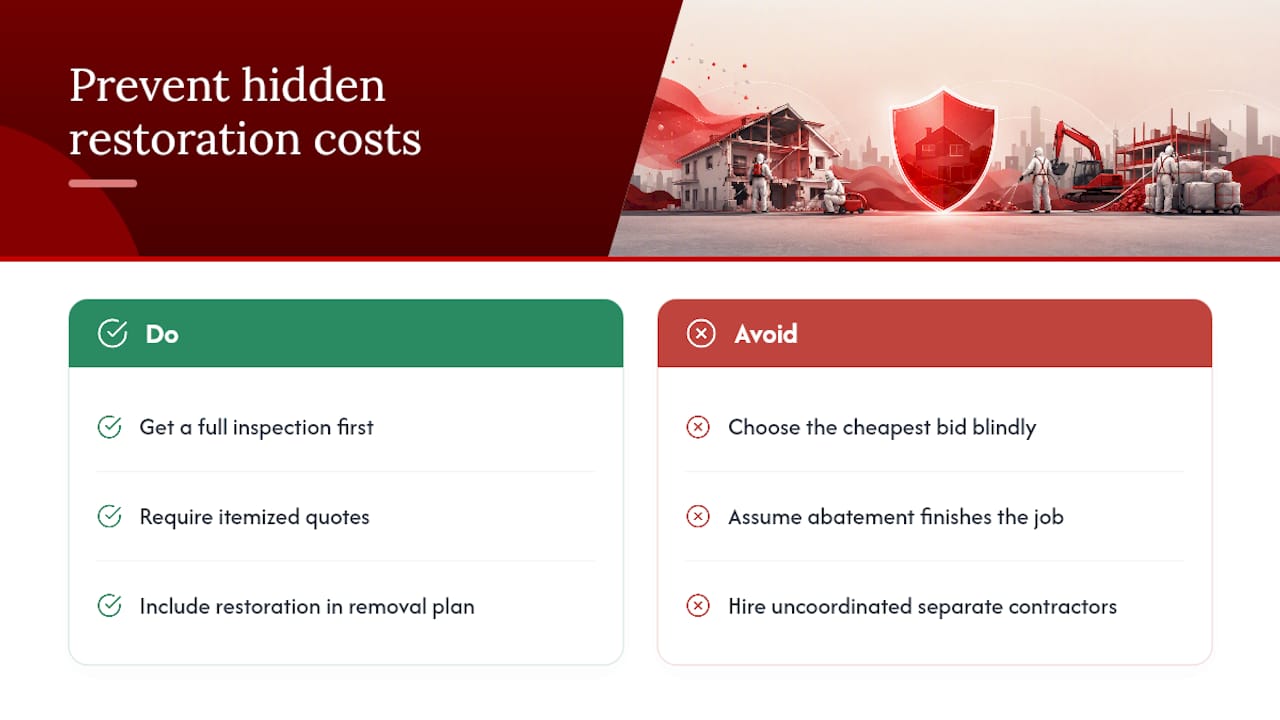
What the research actually supports is this: certified labor and disposal logistics explain most of the price variation between bids, not the size of the job. A homeowner comparing three quotes should spend less time asking “why is this one cheaper” and more time asking “what does this one leave out.” The cheapest bid on paper is frequently the one missing independent air monitoring or a named disposal facility, and that gap doesn’t show up until months later when a lender or inspector asks for paperwork that doesn’t exist.
If you take one thing from this guide, get the inspection first, insist on itemized quotes, and treat restoration as part of the same conversation as removal, not an afterthought you’ll deal with later.
— Zach
Ready to Get a Certified Abatement Quote?
Corneliuswrecking is OSHA certified and asbestos abatement certified, which means we can scope removal and rebuild as one job instead of handing you off between two contractors mid-project. We handle everything from a single contaminated room to full structural demolition involving asbestos, lead, or other regulated materials, across residential, commercial, and industrial sites.
If you’re staring down a popcorn ceiling, old pipe wrap, or a whole house that needs a clean start, request a written estimate through Cornelius Wrecking and get a scope, a certified supervisor’s name, and a disposal plan in writing before any work begins.
Sources
Planning a demolition or excavating project?
Get a fast, no-obligation quote from Cornelius Wrecking.
Request a Quote