3–7 Years to Clear a Coal Plant for Owners: Costs, Permits, Filming
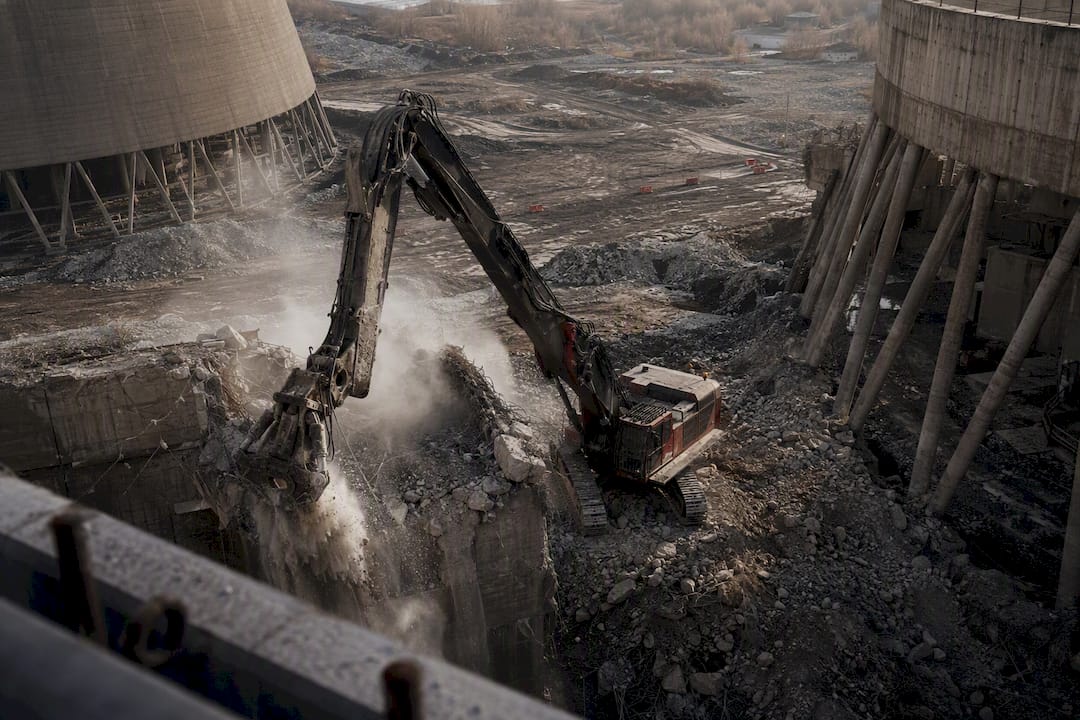
Coal plant demolition follows three distinct phases: a glidepath from retirement announcement to shutdown, active decommissioning, and site redevelopment. The single biggest budget risk sits in the middle phase, where ash-pond and landfill cleanup often takes the largest share of total costs on some projects. Owners who bring in an experienced demolition contractor before that glidepath ends avoid the worst scheduling and budget surprises.
TL;DR:
- The largest cost risk during coal plant decommissioning is typically ash pond and landfill cleanup, which can outweigh demolition and asbestos abatement combined.
- Choosing between implosion, mechanical demolition, or selective deconstruction depends on the structure’s condition, contamination level, and proximity to occupied sites or waterways.
- Long-term groundwater monitoring is essential after remediation, often keeping environmental files open years beyond physical site clearance.
- Engaging a demolition contractor early in the process improves cost estimates, reduces schedule surprises, and allows better assessment of structural and contamination issues.
- Community engagement and transparent redevelopment planning are crucial to minimize local opposition and economic hardship during site closure.
Table of Contents
- What Happens During Coal Plant Decommissioning?
- Which Demolition Method Fits a Coal Plant?
- Why Does Environmental Remediation Drive the Budget?
- How Long Does Coal Plant Decommissioning Take, and What Does It Cost?
- What Permits and Safety Approvals Come Before Demolition?
- How Do Communities Experience Coal Plant Demolition?
- How Do You Document a Demolition Safely?
- Cornelius Wrecking’s Experience With Power Plant Decommissioning
- What I’ve Learned Watching These Projects Unfold
- Ready to Plan Your Power Plant Demolition Project?
- Sources
What Happens During Coal Plant Decommissioning?
A retiring coal plant doesn’t go from operating to rubble overnight. EPRI frames the process as three phases stretched across years, not months, and each phase forces a different decision from the owner.
The glidepath starts the moment a utility announces retirement and runs through final shutdown. Fuel deliveries wind down, staffing shrinks, and engineers begin structural and environmental surveys that will shape everything downstream. Decommissioning covers the physical work: draining systems, abating hazardous materials, demolishing structures, and remediating contaminated ground. Redevelopment is the site’s second life, whether that means a solar farm, a data center, or vacant land waiting for a buyer.
Owners face real choices at each stage, and not every plant gets torn down right away.
- Mothball the plant cold and dark, deferring cleanup costs but leaving long-term liabilities on the books
- Repurpose the site with a fuel switch or partial reuse of existing infrastructure
- Pursue full decommissioning and demolition, clearing the way for redevelopment
Researchers at Pacific Northwest National Laboratory note that many retired coal plants stay standing for years after their last day of generation, simply because remediation costs are steep enough to delay action. What triggers an actual demolition decision usually comes down to three forces: the economics of holding versus clearing the land, mounting regulatory pressure on coal ash storage, and safety liabilities that grow the longer a structure sits idle and unmaintained.
Which Demolition Method Fits a Coal Plant?
Contractors choose between three core approaches, and the right one depends on the structure, the contamination profile, and what’s standing nearby.
- Implosion. Explosives specialists place charges to collapse boiler houses and chimneys inward, often within seconds. This works when the structure is isolated enough that debris and dust won’t threaten neighboring buildings, and when a full structural survey confirms the steel and concrete will fail predictably.
- Mechanical demolition. High-reach excavators and wrecking equipment take structures apart from the top down, piece by piece. This method fits sites near occupied buildings, active rail lines, or waterways, where implosion’s shockwave and debris field pose too much risk.
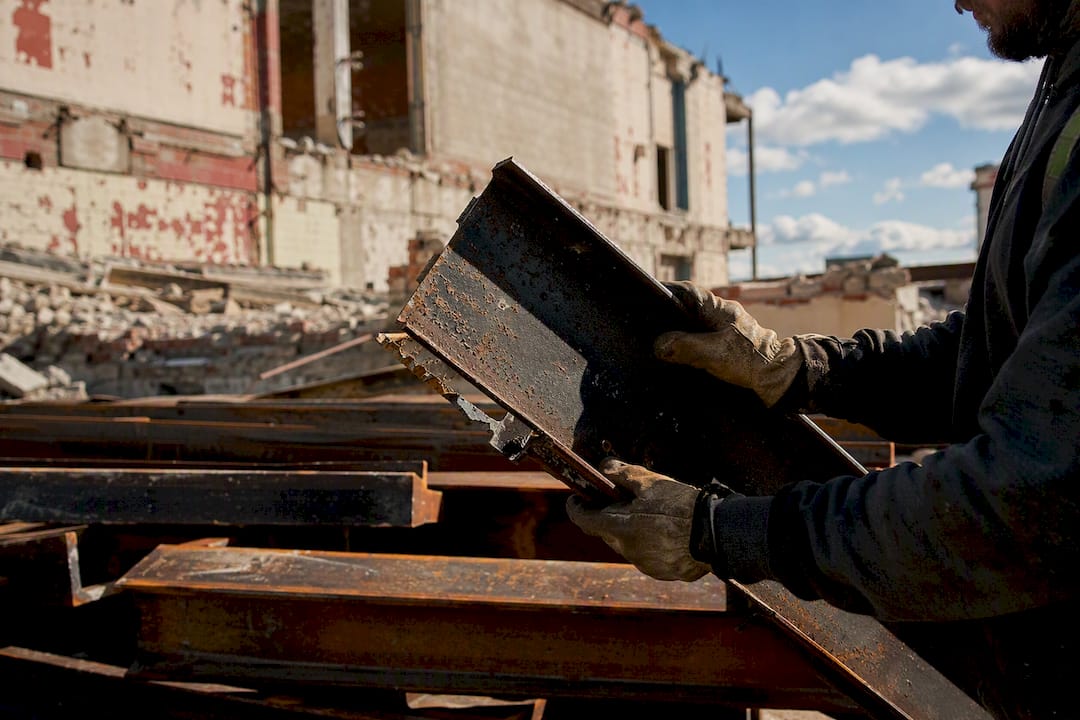
- Selective deconstruction. Crews strip a building in stages, salvaging steel, copper, and equipment before the shell comes down. This approach costs more in labor but recovers material value and lets asbestos abatement happen in controlled phases rather than all at once.
Method selection hinges on four factors: the building’s structural condition, the extent of asbestos or coal ash contamination, proximity to occupied structures or waterways, and how much salvage value sits inside the walls.
Pro Tip: Ask any contractor bidding on the job to walk through their salvage plan before you sign anything. A contractor who has already priced out structural steel and copper recovery is thinking about your bottom line, not just their demolition timeline.
Why Does Environmental Remediation Drive the Budget?
Coal ash cleanup, not the demolition itself, usually determines how much a project costs and how long it takes. Ash ponds and landfills built decades ago hold millions of tons of coal combustion residuals, and closing them safely requires either capping in place or full excavation and removal to a lined disposal facility.
Ash-pond and landfill closure frequently represents the single largest cost category in coal plant decommissioning, outpacing structural demolition and asbestos abatement combined on many projects.
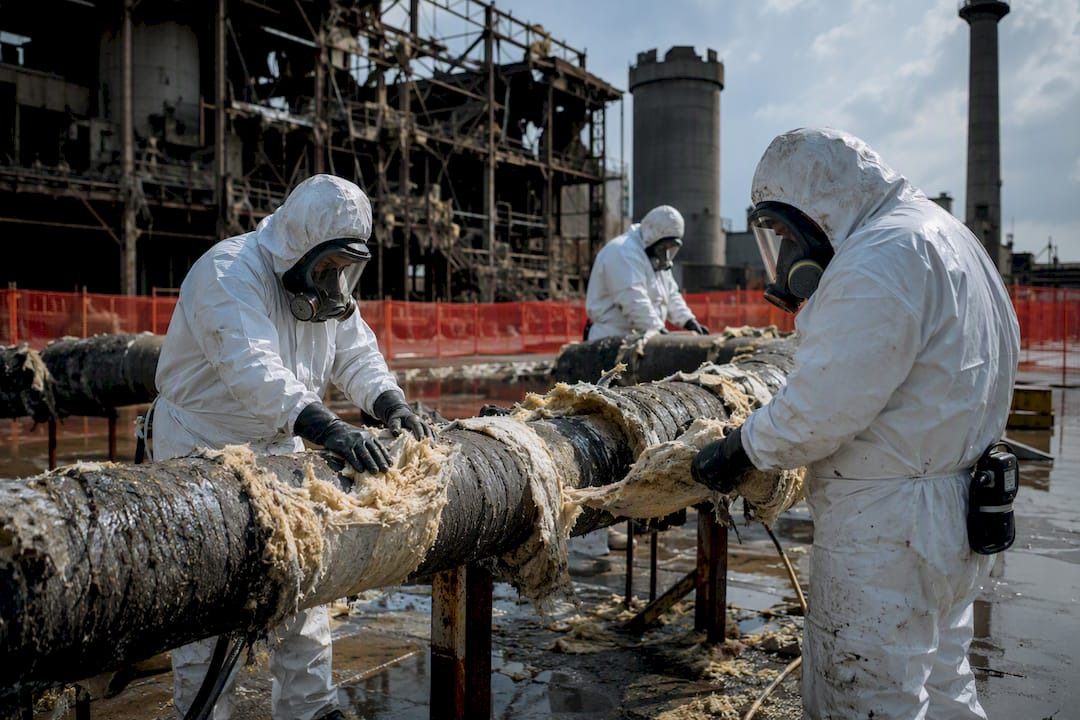
Asbestos survey and abatement come next in sequence, and they have to happen before crews can touch pipe insulation, boiler lagging, or transite panels common in plants built before the 1980s. Contaminated soil from decades of coal handling, oil storage, and chemical treatment adds another remediation layer that often isn’t visible until excavation begins.
- Coal ash pond and landfill closure (capping or full excavation)
- Asbestos-containing material survey and phased abatement
- Contaminated soil testing and remediation before site transfer
- Groundwater monitoring wells that may run for years after demolition ends
Regulatory agencies typically require long-term groundwater monitoring after remediation wraps, which means the site’s environmental file stays open well past the day the last structure comes down. That monitoring obligation is often the deciding factor in whether a parcel gets redeveloped quickly or sits fenced off for years.
How Long Does Coal Plant Decommissioning Take, and What Does It Cost?
Full decommissioning, from glidepath announcement to a cleared, transferable site, commonly spans three to seven years depending on plant size, contamination extent, and how aggressively an owner pursues remediation. ScottMadden’s management guide recommends breaking the work into three phases: project setup, detailed planning, and execution, with early stakeholder engagement built into every stage rather than bolted on at the end.
| Cost category | Typical share of budget | Primary driver |
|---|---|---|
| Ash pond and landfill remediation | Largest single share on affected sites | Volume of coal combustion residuals and disposal method chosen |
| Structural demolition | Moderate share | Building size, method chosen, salvage offset |
| Asbestos and hazardous material abatement | Moderate share | Age of plant, extent of insulation and legacy materials |
| Site restoration and grading | Smaller share | Redevelopment plans and grading requirements |
Funding varies by ownership structure. Regulated utilities often recover costs through an asset retirement obligation booked against ratepayers over time, while merchant generators typically fund remediation and demolition directly from company reserves. Public funding sometimes fills the gap, as in Connecticut’s development agreement that paired state support with a private redevelopment plan to move a former coal site toward demolition.
What Permits and Safety Approvals Come Before Demolition?
No demolition contractor breaks ground without a stack of approvals in hand, and skipping one step can halt a project for months.
- State and federal environmental permits covering coal ash disposal and air quality during demolition
- Local demolition permits and structural engineering sign-off on the implosion or deconstruction plan
- OSHA-compliant safety plans covering asbestos abatement, fall protection, and heavy equipment operation
- Air and dust monitoring plans, particularly for implosions near populated areas
- Advance notification to fire departments, emergency medical services, and local law enforcement
Site safety plans need to account for structural instability in aging boiler houses, where corrosion can weaken steel in ways a visual inspection won’t catch. Continuous air monitoring during abatement work protects both crews and nearby residents from asbestos fiber release.
Pro Tip: Build your emergency service coordination into the permitting timeline, not after. Fire and EMS teams need site maps and hazard briefings well before demolition day, and most jurisdictions require proof of that coordination before issuing a final permit.
How Do Communities Experience Coal Plant Demolition?
A coal plant closure hits a local economy hard, often eliminating the town’s largest employer and a chunk of its tax base in one move. Workforce transition programs, retraining grants, and phased layoff schedules help soften that blow, but the impact rarely disappears entirely.
Three examples show how differently these stories can end. NPR’s coverage of a coal plant demolition on Navajo Nation land captured the event as both an engineering operation and a moment of community grief, tied to decades of jobs and cultural history on that land. A Pennsylvania coal site’s conversion toward data center use shows how proximity to power infrastructure and transmission capacity can turn a former plant into valuable digital-economy real estate. The Boardman smokestack demolition in Oregon drew regional media attention to the sheer structural complexity of bringing down a chimney built to withstand decades of heat and weather.
- Fund workforce retraining programs before the last shift ends, not after
- Communicate redevelopment timelines honestly, even when the site will sit vacant for years
- Involve local residents in redevelopment planning rather than presenting a finished plan
How Do You Document a Demolition Safely?
Implosion footage draws crowds and cameras, but getting the shot without getting hurt takes planning that starts weeks before the event.
- Coordinate with the demolition contractor on exclusion zones and approved media staging areas before finalizing any shot list.
- Check wind direction and forecast timing, since dust clouds from implosions can travel farther than viewers expect.
- Use drones only with explicit permit clearance, since FAA restrictions and site-specific no-fly zones apply near active demolition.
- Bring longer lenses for implosion coverage and plan for continuous shooting on mechanical demolition, which unfolds over days rather than seconds.
Most contractors designate a public viewing area and a media liaison who handles credentialing, which keeps photographers and news crews out of the actual work zone while still giving them a clean vantage point.
Cornelius Wrecking’s Experience With Power Plant Decommissioning
Cornelius Wrecking holds OSHA and asbestos abatement certifications, which matter enormously on a coal plant site where hazardous material handling isn’t optional. The crew has worked power plant and energy facility decommissioning, industrial site clearance, and marine vessel dismantling, giving them range across the kinds of structural and contamination challenges a coal plant throws at a contractor. Their equipment fleet handles everything from selective deconstruction to mass earthwork and foundation excavation once the structures are down. For organizations evaluating contractors, that certification pairing (safety compliance plus hazardous material expertise) is worth confirming before any bid gets serious consideration.
What I’ve Learned Watching These Projects Unfold
Three things separate a coal plant demolition that stays on budget from one that blows past it. First, the owners who bring in a demolition contractor during the glidepath, not after final shutdown, get better cost estimates because the contractor can survey the structure while it’s still accessible and staffed. Second, stakeholder engagement isn’t a courtesy, it’s risk management. A community blindsided by a demolition timeline will fight it in ways that cost more than the outreach would have. Third, remediation risk is almost always underestimated at the proposal stage, because nobody really knows what’s in that ash pond until they start digging.
If you’re planning a coal plant demolition, get a contractor involved before you finalize your shutdown date, not after.
— Zach
Ready to Plan Your Power Plant Demolition Project?
Cornelius Wrecking is the alternative to piecing together separate demolition, abatement, and excavation contractors for a coal plant project. One crew handles the structural teardown, the OSHA-compliant asbestos abatement, and the site restoration work, which means fewer handoffs and fewer places for a schedule to slip.
Their equipment fleet and certified crew have handled industrial demolition, power plant decommissioning, and marine vessel dismantling across Missouri, Kansas, and nationwide large-scale projects. Whether you’re facing an ash pond remediation, a boiler house teardown, or a full site clearance ahead of redevelopment, the same team can scope, permit-coordinate, and execute the whole job. If your organization is early in planning a coal plant demolition, request a consultation through Cornelius Wrecking’s site and include your plant’s size, known contamination issues, and target shutdown date so the estimate reflects your actual project, not a generic range.
Sources
For deeper technical detail, consult PNNL’s decommissioning business models, ScottMadden’s management guide, and EPRI’s retirement planning research. For phased demolition and rebuild project examples, see Mr Build Co.'s demolition and rebuild work.
- Business models for coal plant decommissioning (PNNL/OSTI)
- Coal’s accelerated burn: A management guide to coal plant decommissioning (ScottMadden)
- Well-planned retirement: Keys to successful coal plant decommissioning (Power Magazine)
- A coal power plant demolition serves as a poignant historical moment for the Navajo (NPR)
Planning a demolition or excavating project?
Get a fast, no-obligation quote from Cornelius Wrecking.
Request a Quote