Four Dust Control Measures Contractors Must Run to Meet OSHA Permits
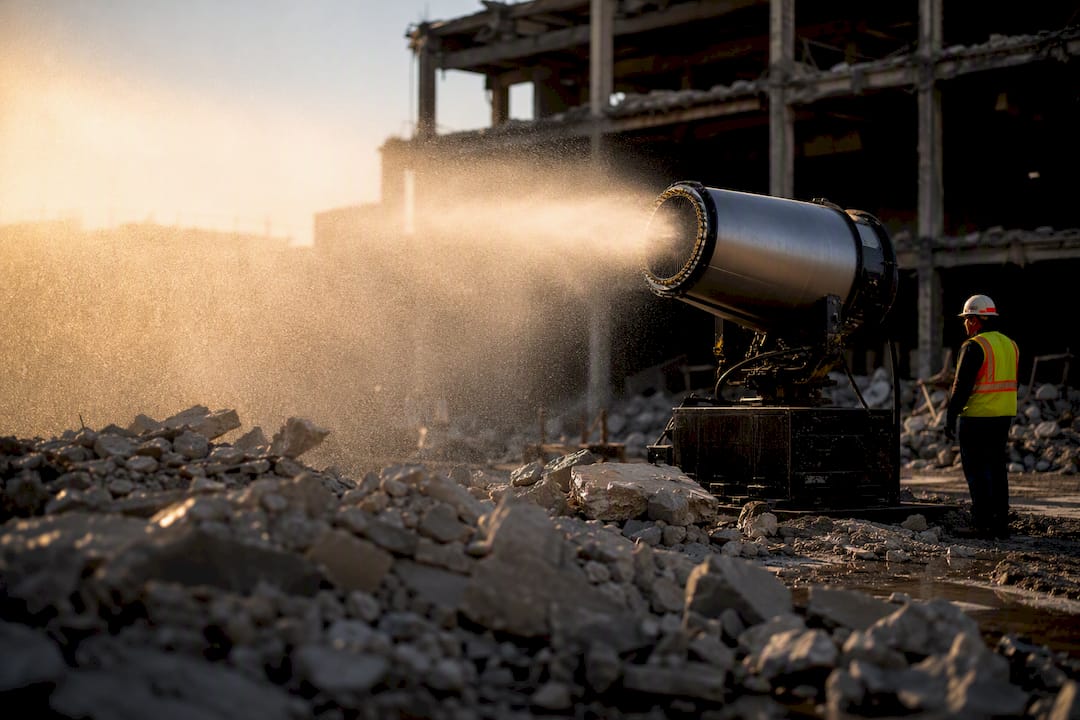
Effective demolition dust control means running four controls together, not picking one: wet suppression to knock dust down at the source, engineering controls like on-tool extraction and negative air to catch what water misses, traffic and containment measures to stop migration off-site, and a written Dust Management Plan that ties everything to OSHA silica requirements and local permits. Engineering controls come first because respiratory protection is the last resort, not the plan. Monitoring throughout the job is not optional.
TL;DR:
- Proper demolition dust control requires combining wet suppression, engineering extraction, traffic and containment measures, and a comprehensive Dust Management Plan for OSHA and local compliance.
- Water must be applied with precision using truck-mounted sprays, on-tool wetting, or atomized misting cannons, avoiding overwatering to prevent runoff and slip hazards.
- Engineering controls like on-tool extraction and HEPA filtration should supplement wet methods, with regular maintenance to ensure equipment functions correctly and effectively.
- Managing site traffic by reducing vehicle speed, installing wheel-wash stations, and scheduling high-dust tasks during low-wind periods significantly reduces off-site dust migration.
- Continuous monitoring, recording inspections, and adjusting controls based on wind and dust level triggers are essential for effective long-term dust suppression and regulatory compliance.
Table of Contents
- Wet Suppression Methods That Actually Work
- Engineering Controls: Extraction, Negative Air, and Filtration
- Traffic, Track-Out, and Containment on Site
- Building a Dust Management Plan That Meets Permit Requirements
- Monitoring, Triggers, and Recordkeeping
- How Cornelius Wrecking Applies These Controls in Practice
- Types of Demolition Dust and Where It Comes From
- Advanced Suppression Technologies Beyond Water
- Training and PPE Requirements for Dust Control Crews
- Health Risks Tied to Demolition Dust Exposure
- Environmental Impact and Community Considerations
- What Site Managers Consistently Get Wrong
- How Cornelius Wrecking Can Help With Compliant Demolition
- Sources
- FAQ
Wet Suppression Methods That Actually Work
Water is still the workhorse of demolition dust control, but only when it’s applied with intent. Dumping a hose on a pile of rubble and calling it done wastes water, creates mud, and often leaves the fine respirable fraction airborne anyway.
Three wet methods cover most demolition scenarios:
- Truck-mounted or trailer spraying for large-area suppression during mechanical demolition or debris handling.
- On-tool wetting attached directly to breakers, shears, and crushers, so water hits the material at the point of fracture.
- Atomized misting cannons for high-reach or wide-area jobs where hose spraying can’t cover the footprint, especially on tall structure teardowns.
OSHA’s guidance on silica dust control is clear that water needs to be applied at a rate that suppresses visible dust without turning the work area into slurry. Overwatering isn’t a safety margin, it’s a runoff problem and a slip hazard. Experienced crews calibrate flow rates and sometimes add surfactants or polymer emulsions to cut total water volume while still knocking down the respirable fraction.
Runoff control matters as much as the spraying itself. Many jurisdictions require a hydrant permit before you tap a municipal water source, and Seattle Public Utilities recommends berms or dikes around active wet-suppression zones to keep contaminated water out of storm drains. Daily sweeping of adjacent paved surfaces closes the loop.
Pro Tip: Test your spray pattern before the first load drops. A misting cannon aimed too high just makes fog for the neighbors; aimed right, it settles dust before it ever leaves the debris pile.
Engineering Controls: Extraction, Negative Air, and Filtration
Water handles bulk dust, but engineering controls catch the respirable silica fraction that wet methods alone can miss, especially during cutting, grinding, or interior demolition where enclosed spaces trap particulate.
Three setups cover most jobs:
- On-tool extraction pulls dust at the point of generation on saws, grinders, and drills, usually paired with a HEPA-rated vacuum system.
- Negative air machines depressurize a work zone relative to surrounding areas, preventing dust migration through doorways and gaps, and should exhaust through HEPA filtration rated to capture 99.97% of particles at 0.3 microns.
- Enclosed, pressurized operator cabs on excavators and loaders protect equipment operators, provided cab filters meet a MERV rating suited to fine particulate and are checked for door and window seal leaks.
Maintenance is where these systems quietly fail. A HEPA filter clogged with debris loses suction fast, and a negative air unit with a torn duct is worse than no unit at all because crews assume it’s working. Build filter replacement and leak checks into your daily walk. OSHA notes that when engineering controls and wet methods are implemented per Table 1 of the silica standard, respirators often aren’t required at all. That’s the goal: engineering controls doing the heavy lifting, with respiratory protection as backup, never the primary plan, per OSHA’s respiratory protection standard.
Traffic, Track-Out, and Containment on Site
Dust that settles doesn’t stay settled once a loader drives through it. Site traffic re-entrains fine particulate constantly, and that’s a controllable variable most crews underuse.
- Cut vehicle speed on unpaved areas. Dropping haul-road speeds from 40 mph to 20 mph can cut dust emissions by roughly 65%, and wider vehicle spacing reduces the plume each truck kicks up behind it.
- Install wheel-wash pads or gravel exit pads at the site boundary so trucks aren’t carrying loose material onto public roads.
- Sweep paved surfaces daily, not weekly, near the site perimeter and any staging areas.
- Sequence high-dust tasks for low-wind windows and add temporary mesh or sheeting barriers on the downwind property line during those tasks.
Building a Dust Management Plan That Meets Permit Requirements
A Dust Management Plan is the document that turns everything above from good intentions into a repeatable, auditable process. Most planning approvals for large demolition projects now require one as a condition of the permit, per EPA guidance on stormwater and dust at demolition sites.
A workable plan spells out:
- Which control (wet suppression, extraction, containment) applies to each task and phase.
- Who’s responsible for setup, monitoring, and reapplication on each shift.
- Inspection cadence, at minimum daily visible-dust checks during active demolition.
- Documentation format, since photos and logs are what regulators ask for after the fact.
OSHA’s Table 1 controls apply directly to tasks involving concrete, masonry, or other silica-bearing materials, meaning your plan needs to map specific equipment (jackhammers, saws, crushers) to the exact wet method or extraction setup Table 1 specifies. Local air-quality or stormwater permit conditions often layer on top of that federal baseline, so confirm requirements with your local regulator before the demolition schedule locks in, not after.
Pro Tip: Draft the plan alongside your Method Statement, not after it. Crews follow documents they’ve already seen, not ones handed out on day one.
Monitoring, Triggers, and Recordkeeping
Dust control isn’t a one-time setup. Humidity, wind, and traffic volume shift throughout a shift, and effective site managers treat suppression as something to adjust continuously, not a box checked at the morning briefing.
- Run a visible-dust check every couple of hours during active demolition; if you can see a plume, reapply water immediately.
- Set a wind-speed trigger (many crews use 20 to 25 mph gusts) that pauses high-dust tasks or adds containment.
- Stop work if suppression clearly fails, don’t wait for the shift to end to fix it.
- Log inspections with timestamped photos. That record is what protects you if a regulator or neighbor files a complaint.
How Cornelius Wrecking Applies These Controls in Practice
Cornelius Wrecking holds OSHA and asbestos abatement certifications and has run dust control across power plant decommissioning, refinery demolition, and marine vessel dismantling, projects where failure isn’t an option. That experience shapes how the crew builds Method Statements before mobilization: mapping each demolition phase to a specific wet or engineering control, assigning monitoring responsibility by shift, and documenting inspections as the job progresses rather than after the fact. Contractors managing complex or hazardous-material sites can request a project consultation through Cornelius Wrecking’s team to see how a documented plan gets structured for a job of comparable scale.
Types of Demolition Dust and Where It Comes From
Not all demolition dust carries the same risk, and treating it as one uniform problem leads to under-controlling the dangerous fraction while over-controlling the harmless one.
Crystalline silica dust comes from cutting, crushing, or grinding concrete, brick, masonry, and stone, and it’s the fraction OSHA’s Table 1 controls specifically target because respirable silica particles are small enough to lodge deep in lung tissue.
Wood and drywall dust generates heavily during interior demolition and framing removal. It’s less immediately hazardous than silica but still an inhalation irritant, and drywall dust in particular clogs filtration systems fast because of its fine, chalky texture.
Asbestos-containing material (ACM) dust shows up in older structures, insulation, floor tile, and roofing, and requires abatement certification before any disturbance, a separate regulatory track from general dust suppression entirely.
Lead-based paint dust appears on pre-1978 structures during exterior demolition and requires its own containment and disposal protocol.
Track-out and ambient particulate covers the coarser material that vehicles and equipment kick up from the ground itself, which is what traffic control and wheel-wash pads specifically target. Knowing which category you’re generating on a given task tells you which control to deploy, rather than defaulting to a generic spray-and-hope approach.
Advanced Suppression Technologies Beyond Water
Water works, but it’s temporary, and on large or long-duration sites the labor cost of constant reapplication adds up fast. Chemical suppressants close that gap.
Polymer emulsions bind fine particulate to larger aggregate, creating a crust that resists wind erosion far longer than plain water. They cost more upfront but need reapplication far less often, which matters on multi-week teardowns.
Lignosulfonates and brine-based products are common on unpaved haul roads and staging areas, offering a middle ground between water’s short life and polymer’s longer hold. The EPA’s dust control BMP guide notes mulch application can reduce wind erosion by 75 to 95%, an option worth considering on exposed soil areas adjacent to active demolition where vegetation removal has left bare ground.
Wind fencing and temporary vegetation provide a passive, low-maintenance layer, particularly effective on sites with long idle periods between demolition phases.
The tradeoff across all of these, per USDA technical guidance on suppressants, is environmental impact versus longevity. Chemical stabilizers last longer but need manufacturer-specific application rates and can affect soil chemistry if overused near waterways. Match the product to the site, not the other way around.
Training and PPE Requirements for Dust Control Crews
Every crew member on a demolition site handling dust-generating tasks needs task-specific training, not a generic safety orientation. That means understanding which tasks trigger OSHA Table 1 controls, how to operate and maintain on-tool extraction equipment, and when a wet method has failed and needs escalation.
Respiratory protection remains necessary in specific scenarios, enclosed-space work, tasks where engineering controls can’t fully suppress silica, or emergency conditions where suppression equipment fails mid-task. Half-face or full-face respirators with P100 filters are standard for silica-heavy tasks; N95s are inadequate for sustained high-exposure work. Fit testing isn’t a formality; a poorly fitted respirator provides a false sense of protection.
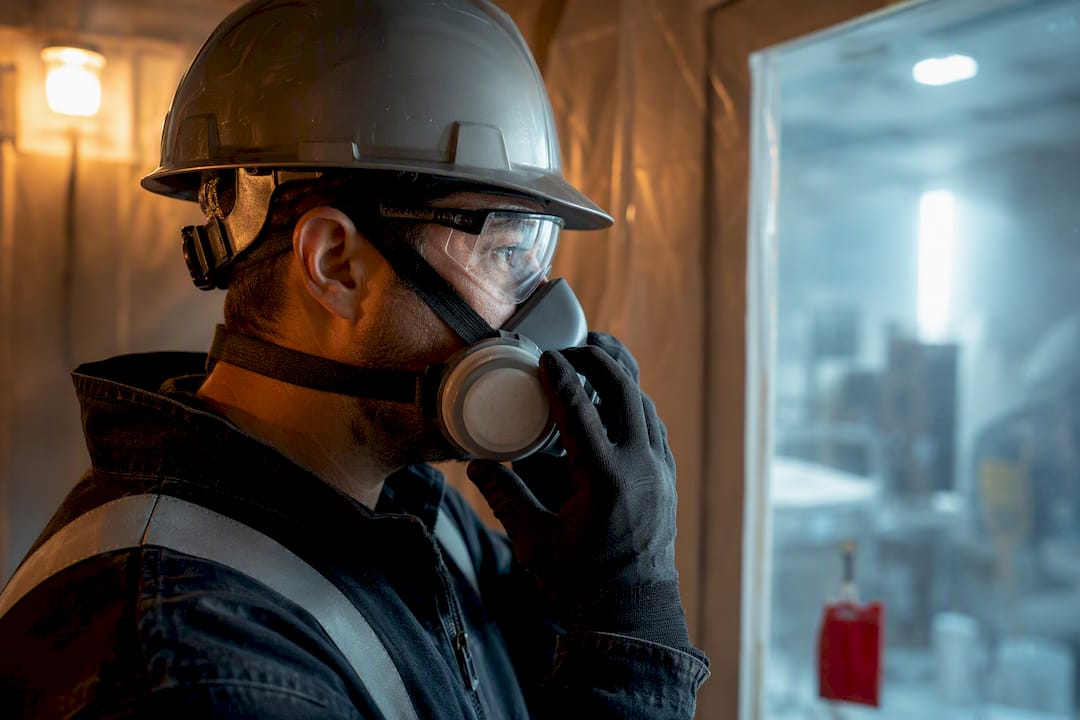
Beyond respiratory gear, standard PPE for dust-heavy demolition includes eye protection rated for particulate impact, since dust and debris go hand in hand, and skin protection when working with chemical suppressants or ACM. Training should cover PPE inspection and replacement schedules too. A cracked respirator seal or a filter past its service life is a control failure disguised as compliance.
Health Risks Tied to Demolition Dust Exposure
The health stakes behind demolition dust control aren’t abstract. Crystalline silica exposure over time causes silicosis, an irreversible lung scarring condition, and is linked to increased lung cancer risk. Unlike an acute injury, silicosis often doesn’t show symptoms until years after the exposure that caused it, which is exactly why OSHA treats engineering controls as mandatory rather than optional on qualifying tasks.
Asbestos exposure carries its own distinct risk profile, mesothelioma and asbestosis, with no established safe exposure threshold, which is why abatement work sits under a separate certification and containment protocol entirely.
Shorter-term effects matter too, and they’re easier for crews to dismiss. Wood, drywall, and general construction dust irritate eyes, throat, and airways, and can trigger or worsen asthma and other respiratory conditions in workers with existing sensitivities. Lead dust exposure, particularly relevant on older structure teardowns, accumulates in the body over repeated exposure and affects neurological and kidney function long before workers notice symptoms.
None of this argues for panic. It argues for the layered control approach covered above, because the whole point of wet suppression plus engineering controls plus monitoring is reducing exposure before it becomes a chronic health outcome nobody can undo.
Environmental Impact and Community Considerations
Demolition dust doesn’t stop at the property line, and neighbors notice fast. Fine particulate matter drifting off-site contributes to local air quality complaints, and in dense or mixed-use areas, dust settling on nearby vehicles, buildings, and outdoor spaces generates real friction with the surrounding community well before any regulator gets involved.
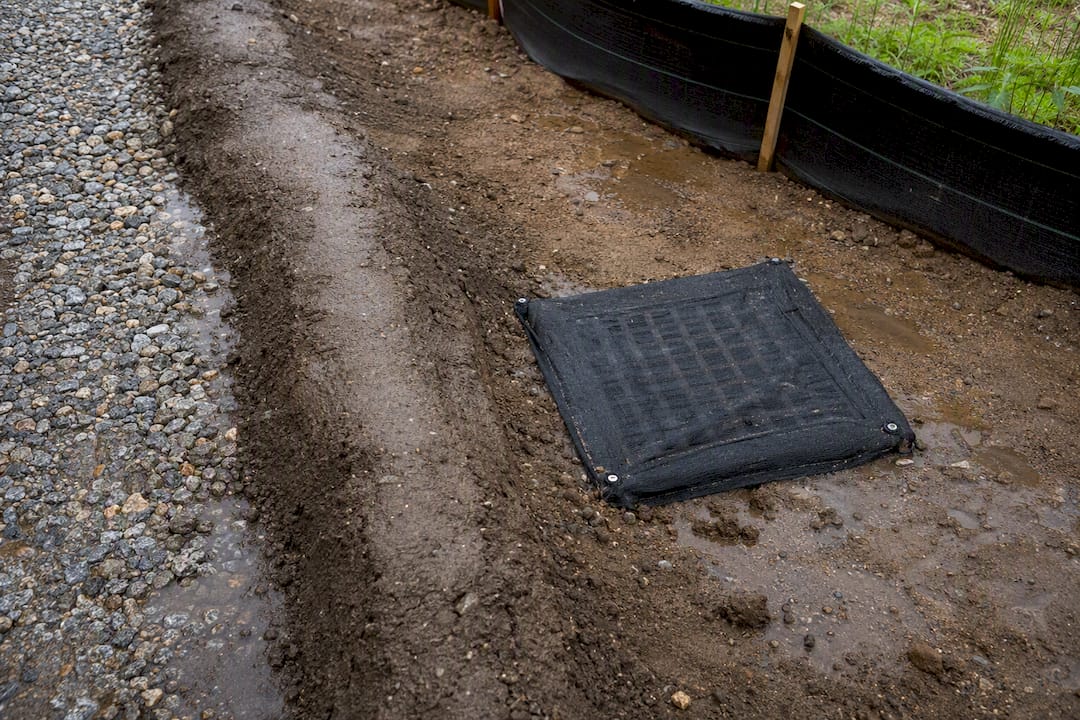
Stormwater runoff from over-watering or uncontrolled site drainage carries sediment and contaminants into storm drains, which is exactly why EPA guidance ties Dust Management Plans to stormwater protections rather than treating them as separate problems. Berms, sediment fencing, and proper drain covers aren’t just permit checkboxes; they keep demolition debris out of local waterways.
Community relations often come down to communication as much as technical control. Posting a project timeline, sharing contact information for dust complaints, and running high-dust tasks during announced windows reduces the number of angry calls a site manager fields. A demolition project that runs clean and transparent tends to get fewer stop-work orders, fewer complaint-driven inspections, and less resistance on the next permit application.
What Site Managers Consistently Get Wrong
Overwatering is the most common mistake I see, treating water volume as a proxy for control quality when runoff and slurry create new problems. Late planning is a close second: writing the Dust Management Plan after mobilization instead of alongside the Method Statement. Skipping monitoring is the quiet killer, since a control that worked at 8 AM can fail by noon if wind picks up.
The quick wins are just as simple: run a pre-task briefing every morning, put wheel-wash at every exit, and do the visible-dust check without skipping it.
— Zach
How Cornelius Wrecking Can Help With Compliant Demolition
If you’re planning a demolition project that needs more than a hose and good intentions, Cornelius Wrecking gives you a contractor who builds the Dust Management Plan and Method Statement into the project from day one, not as a compliance afterthought. Unlike hiring separate demolition and abatement crews and coordinating their paperwork yourself, Cornelius Wrecking carries both OSHA and asbestos abatement certifications under one contract, which matters most on jobs involving older structures, power plants, or industrial sites where hazardous materials and dust control can’t be handled as separate problems.

The team has applied these controls, wet suppression, engineering extraction, traffic management, and documented monitoring, on projects of various scales including residential teardowns and complex demolitions. If your next project needs a contractor who treats dust control as part of the plan rather than a reaction to a complaint, request a site visit or quote from Cornelius Wrecking and get a project-specific rundown of how the controls above would apply to your site.
Sources
- Control of Silica Dust in Construction: Heavy Equipment and Utility Vehicles Used During Demolition Activities (OSHA)
- Managing Stormwater and Dust at Demolition Sites (EPA)
- Top Ten Dust Control Techniques List (Alaska DEC)
FAQ
How do you control dust during demolition?
Combine wet suppression (spraying, misting cannons, on-tool wetting) with engineering controls like negative air and HEPA extraction, then back both with traffic management and a written Dust Management Plan that assigns monitoring responsibility.
What is the OSHA standard for dust control?
OSHA’s silica standard uses Table 1 to specify required engineering controls, like wet methods or on-tool extraction, for specific equipment and tasks, with respiratory protection required only when those controls can’t fully manage exposure.
How long does it take for dust to settle after demolition?
There’s no fixed timeline; it depends on particle size, wind, and humidity, which is exactly why continuous monitoring and reapplication of controls matters more than assuming dust settles on its own after a set period.
Is there a simple trick to cut down on dust?
The most reliable low-cost method is consistent, correctly calibrated water application at the point where material is being broken or cut, paired with slower site traffic to stop settled dust from being kicked back into the air.
Can Cornelius Wrecking help write a Dust Management Plan for my project?
Yes. Cornelius Wrecking develops Method Statements and monitoring plans as part of its demolition and abatement contracts, tailored to the specific controls a project’s tasks and permits require.
Planning a demolition or excavating project?
Get a fast, no-obligation quote from Cornelius Wrecking.
Request a Quote