How Owners Use EMR vs TRIR to Decide Who Can Bid
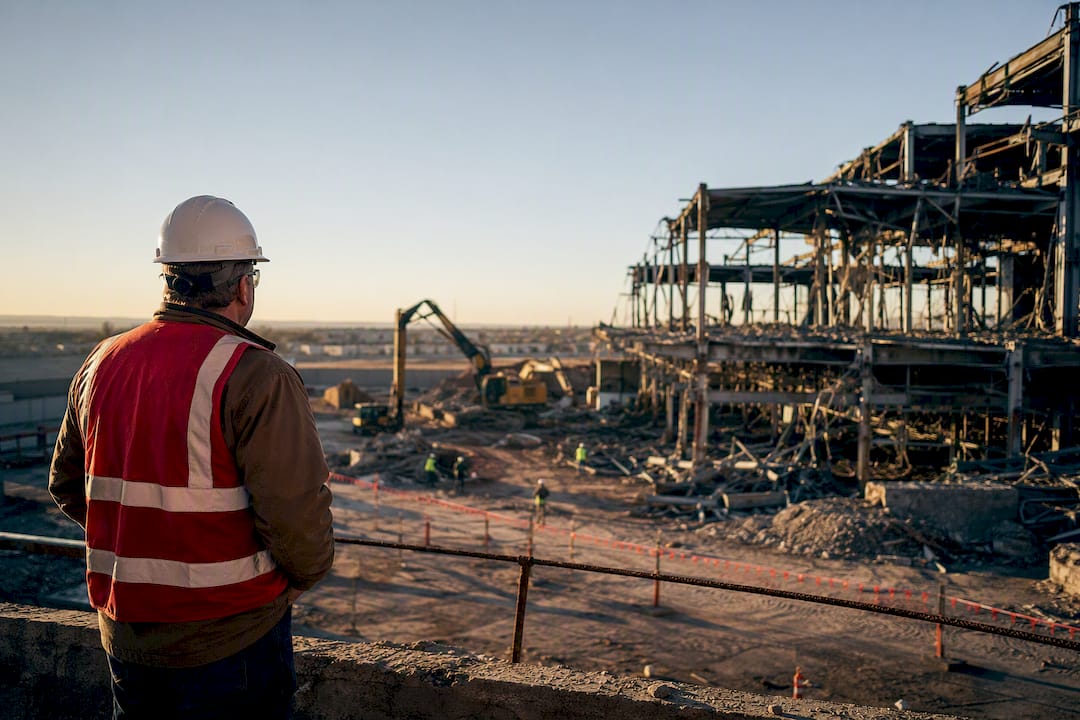
EMR is an insurer-facing, cost-weighted three-year rating; TRIR is an OSHA-based frequency rate. Insurers and underwriters lean on EMR to price workers’ compensation premiums, while safety directors and OSHA inspectors track TRIR to gauge how often recordable injuries happen. Both are lagging indicators built from past events, not live conditions, so neither one alone tells you whether a contractor is safe to hire today.
TL;DR:
- EMR reflects past claims cost and is heavily weighted toward primary losses, which can cause delays of up to three years before improvements show in the rating.
- Small contractors experience more volatility in TRIR due to the impact of single incidents on its calculations, making it unreliable for short-term safety assessments.
- A low TRIR paired with an elevated EMR often indicates claims settled outside OSHA logs, while a low EMR with a high TRIR suggests recent injury spikes not yet impacting insurance costs.
- Successful safety improvements for TRIR typically occur within one to two quarters through operational changes, while EMR requires claims management over at least a year for noticeable benefits.
- Prequalification should include both EMR and OSHA logs, along with claims narratives and certification verification, to obtain an accurate safety profile of contractors.
Table of Contents
- EMR vs TRIR: Understanding the Experience Modification Rate
- EMR vs TRIR: What the Total Recordable Incident Rate Measures
- EMR vs TRIR: Comparing the Two Metrics Side by Side
- How Owners and Insurers Use EMR and TRIR in Prequalification
- Where EMR and TRIR Numbers Get Misread
- Moving the Needle: Tactics for Improving TRIR and EMR
- A Practitioner’s Checklist for Vetting Safety Records
- Why We Weigh Field Evidence as Heavily as the Numbers
- Request Cornelius Wrecking’s Safety Prequalification Packet
- Sources
EMR vs TRIR: Understanding the Experience Modification Rate
The Experience Modification Rate compares a company’s actual workers’ compensation losses against the expected losses for similar businesses in its industry classification. State rating bureaus and the National Council on Compensation Insurance calculate it using payroll data reported by classification code, cross referenced against claims filed with insurers.
The math looks straightforward on the surface but rewards a specific kind of discipline. NCCI splits every claim into a primary portion (the first several thousand dollars) and an excess portion (everything above that threshold), then weights primary losses more heavily than excess losses. That structure means five small claims worth $8,000 each often hurt your mod more than one $40,000 claim, since the smaller claims each trigger the full primary penalty. EMR calculations run on a three-year rolling window that excludes the most recent policy year entirely, so a bad quarter this year won’t show up in your mod until the next renewal cycle at the earliest.
A rating of 1.0 represents the industry average for a given classification and state. Anything below 1.0 signals better than average loss experience; anything above it costs money immediately.
Pro Tip: A modest increase in the mod on a multi-million-dollar manual premium can add a significant amount in additional annual premium cost. That’s not a rounding error. It’s the difference between winning a bid and losing one on price alone.
Typical construction benchmarks cluster contractors near the industry average, with general contractors on large commercial jobs often requiring an average or better rating to be eligible to bid. Because of the lag built into the calculation:
- A contractor who fixed a serious hazard six months ago won’t see that improvement reflected in EMR for another two to three years.
- A single catastrophic claim can inflate a mod for three consecutive renewal cycles even after the underlying cause is resolved.
- Small and mid-sized contractors see more volatility per claim than large firms with bigger payroll bases to spread losses across.
EMR vs TRIR: What the Total Recordable Incident Rate Measures
TRIR counts a different set of numbers entirely. Where EMR tracks dollars, TRIR tracks events, specifically the OSHA-recordable incidents defined under 29 CFR 1904. That standard sets the threshold for what counts: any work-related injury or illness requiring medical treatment beyond first aid, days away from work, restricted duty, or job transfer.
The formula itself is simple:
- Count total OSHA-recordable incidents over the measurement period.
- Multiply that number by 200,000 (the hours 100 full-time employees would work in a year).
- Divide by actual total hours worked by the entire workforce during that period.
A crew that logs three recordable incidents across 300,000 total hours worked produces a TRIR of 2.0. That number gets compared against BLS industry averages by NAICS code, which vary widely. Specialty trade contractors often have TRIR values somewhat above average, while some heavy civil and demolition-adjacent classifications exhibit higher rates due to the nature of the work.
Statistic Callout: The formula’s 200,000-hour base assumes 100 workers logging full-time hours for a year, which is why small contractors see wild swings from a single incident.
Here’s where TRIR gets tricky for smaller firms. A company with 40,000 annual labor hours needs only one recordable incident to spike its TRIR well above the industry average, even if the underlying safety program is sound. That volatility makes single-year TRIR comparisons unreliable for anything but the largest contractors, and it’s also where recording judgment calls creep in. Two site supervisors can look at the same twisted ankle and reach different conclusions about whether it meets the recordability threshold, and that inconsistency shifts the number without changing actual risk.
EMR vs TRIR: Comparing the Two Metrics Side by Side
The two metrics answer different questions, and confusing them leads to bad prequalification decisions. TRIR tells you how often something happened. EMR tells you what it cost, filtered through an insurance actuary’s lens.
| Dimension | EMR | TRIR |
|---|---|---|
| What it measures | Claims cost relative to industry expectation | Frequency of OSHA-recordable incidents |
| Data source | Insurer claims records via NCCI/state bureaus | Internal OSHA 300 logs |
| Time window | Three-year rolling, excludes current year | Typically calculated annually |
| Sensitivity | Severity and claim frequency, weighted toward small/frequent claims | Frequency only, treats all recordables equally |
| Manipulability | Low (external insurer data) | Moderate (recording judgment, classification calls) |
| Primary users | Insurers, bonding companies, procurement finance | Safety directors, OSHA, field operations |
A contractor with a low mod and a high TRIR usually has a good insurance relationship and aggressive claims management, but a workforce racking up recordable injuries that haven’t yet produced expensive claims. That pattern often precedes a mod increase down the road. The reverse, a high mod with a low TRIR, frequently points to one or two legacy claims still working through the three-year window, sometimes from a past ownership structure or an acquired subsidiary.
- Bidders should weight EMR heavily because it directly affects bonding capacity and insurance cost, which flows into bid pricing.
- Insurers weight EMR by definition, since it’s their own rating mechanism.
- Field operations and safety teams should weight TRIR, since it’s the only one of the two that reflects current conditions.
Pro Tip: When you see a mismatch between the two numbers, ask for the claims narrative before you assume anything. A low TRIR paired with a climbing EMR often means claims are being settled quietly outside the OSHA log, not that the site is actually safer.
How Owners and Insurers Use EMR and TRIR in Prequalification
Most owner-side prequalification forms set a hard EMR ceiling, commonly 1.0, below which a bid gets disqualified before anyone reviews the technical proposal. TRIR thresholds get compared against the relevant BLS NAICS average, and a contractor running meaningfully above that average faces added scrutiny even with an acceptable mod.
These numbers also ripple into bonding capacity and general liability pricing, since sureties view EMR as a proxy for management discipline. A rising mod can shrink bonding limits right when a contractor needs them most for a bigger project.
Numbers alone don’t tell the whole story, so procurement teams should verify:
- Claim narratives explaining the circumstances behind any large losses
- Recent OSHA citation history and abatement documentation
- Third-party safety audit results, not just self-reported data
- Leading indicator programs (near-miss reporting, toolbox talk frequency)
Documents to request during prequalification:
- Three years of EMR letters from the current and prior carriers
- OSHA 300 and 300A logs for the same period
- A written return-to-work policy
- Any third-party safety audit or Veriforce/ISNetworld compliance report
Where EMR and TRIR Numbers Get Misread
The biggest misconception is assuming TRIR drives insurance premiums directly. It doesn’t. EMR drives premium, and TRIR only affects EMR indirectly, over years, once incidents convert into paid claims. Another common error is treating a low current TRIR as proof of a currently safe operation, when it might just reflect underreporting or a recent change in what supervisors classify as recordable.
Data integrity issues compound the problem. Some contractors settle minor injuries out of pocket to avoid a workers’ comp claim, which quietly deflates EMR while doing nothing for actual safety. Small-sample volatility distorts TRIR the same way, discussed above. And because EMR excludes the current policy year, a contractor’s most recent safety investments simply won’t show up in the mod for another year or two.
Watch for these red flags that warrant a closer look before accepting either number:
- A TRIR that dropped sharply with no corresponding change in headcount, scope, or safety program
- An EMR near 1.0 paired with a recent history of OSHA citations
- Reluctance to provide OSHA 300 logs alongside the EMR letter
- Claims narratives that don’t match the incident types shown in the OSHA log
Pro Tip: Ask for both documents together, not one or the other. A contractor with nothing to hide will hand over the OSHA 300 log and the EMR letter in the same email.
Moving the Needle: Tactics for Improving TRIR and EMR
TRIR responds to changes fast because it’s built from current-year incident counts. EMR moves slowly because it’s built from a three-year claims window that excludes this year’s data entirely.
For TRIR, the fastest wins come from operational changes on site:
- Strengthen near-miss reporting so hazards get flagged before they become recordable injuries.
- Give crews real stop-work authority and back it up when they use it.
- Run toolbox talks tied to the specific hazards on that week’s scope of work.
- Audit first-aid logs quarterly to catch classification drift before it becomes a pattern.
For EMR, the levers sit in claims management rather than field behavior. Early return-to-work programs and aggressive medical case management show measurable EMR benefit faster than large engineering changes, because they reduce the size of primary losses on claims that do occur. Managed care networks and nurse case managers on every claim over a set dollar threshold also help.
Statistic Callout: Because EMR excludes the current policy year, expect that claims-management improvements may take over a year to impact your mod, even if the underlying program changes immediately.
Track leading indicators like near-miss counts and stop-work incidents monthly, and expect TRIR movement within one to two quarters versus one to two years for EMR.
A Practitioner’s Checklist for Vetting Safety Records
Before signing a contract with any demolition or excavation partner, request the full picture: three years of EMR letters, OSHA 300 and 300A logs, claims narratives for any loss over $25,000, the firm’s return-to-work policy, and any third-party audit reports.
- Confirm OSHA and asbestos abatement certifications directly rather than taking a summary at face value.
- Ask what project types the crew has actually handled, not just what the company markets.
- Request how claims were resolved, without expecting private settlement dollar amounts.
A contractor that can hand over its EMR history, its OSHA logs, and a clear return-to-work policy in the same conversation has usually already done the internal work that keeps both numbers moving in the right direction.
Some demolition and excavation contractors maintain OSHA and asbestos abatement certifications and handle complex projects such as power plant decommissioning and marine vessel dismantling, where safety documentation gets scrutinized hardest.
Why We Weigh Field Evidence as Heavily as the Numbers
Numbers get you through the first screen, but they don’t tell you whether a crew respects a stop-work call at 2 p.m. on a Friday. We treat EMR and TRIR as a starting filter, not a final verdict, and we always ask for the claims narrative behind any number that looks unusually good or unusually bad.
Two things put us on alert immediately: a TRIR that seems too clean given the scope of work performed, and any claim history with costs that don’t match the described incident. Both usually mean someone is managing the paperwork more carefully than the job site.
If you’re prequalifying a demolition or excavation partner for a complex project, ask for the full packet, not just the summary sheet.
— Zach
Request Cornelius Wrecking’s Safety Prequalification Packet
Some contractors carry OSHA and asbestos abatement certifications that owners and general contractors check first, and have experience on projects such as power plant decommissioning, marine vessel dismantling, and petroleum refinery demolition, the project types where a thin safety file can get a bid disqualified before pricing is reviewed.
Instead of chasing down claims narratives and OSHA logs from a contractor who hesitates to share them, get the full picture up front. Request Cornelius Wrecking’s prequalification packet directly, including EMR history, OSHA 300 documentation, and certification records, so your procurement team can move straight to scope and pricing without a compliance detour.
Sources
Planning a demolition or excavating project?
Get a fast, no-obligation quote from Cornelius Wrecking.
Request a Quote