Calculate True Excavation Cost Per Yard for Owners & Contractors
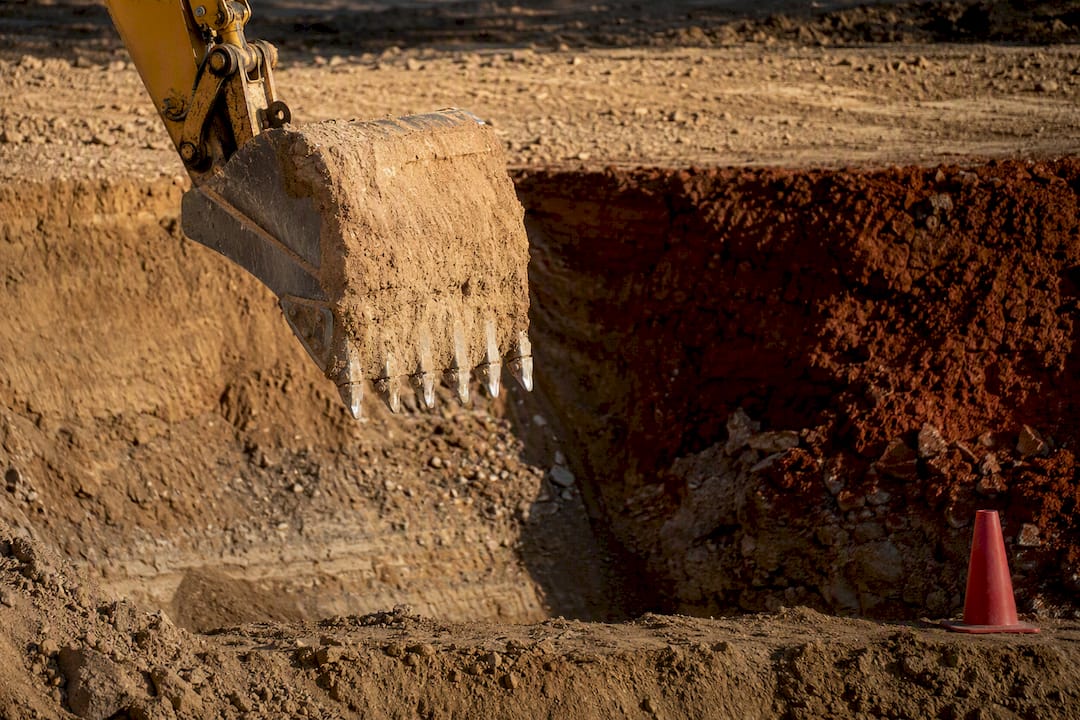
Most machine excavation in ordinary soil runs a typical price range for machine excavation in common soil, while wet clay pushes that to roughly $15 to $40 and rock work can climb past $200 depending on whether it needs ripping or blasting. The number that actually lands on your invoice depends on soil classification, depth, site access, haul-off distance, and mobilization charges, which is why two jobs of identical size can carry wildly different price tags.
TL;DR:
- Soil type and site access are the primary factors influencing costs, with wet clay costing $15 to $40 per cubic yard and blasting rock exceeding $100 per yard.
- Haul-off fees often add $10 to $15 per loose cubic yard, and costs increase significantly if utilities or groundwater slow work or require pumping.
- Mobilization costs are charged per trip, meaning small jobs can be disproportionately expensive due to fixed start-up fees spread over low volume.
- Accurate bid comparisons require clarification of measurement basis, as errors between bank yards and loose yards can inflate costs by 20% to 30%.
- Large or complex projects involving contamination, deep foundations, or industrial sites typically justify full crew and equipment costs, including certification and disposal logistics.
Table of Contents
- Excavation Cost Per Cubic Yard: Quick Reference Ranges
- What Drives the Price: Soil, Rock, Water, and Access
- The Line Items Hiding Inside Your Excavation Quote
- How to Calculate Your Own Excavation Cost Per Yard
- Hiring a Contractor vs. Doing It Yourself
- What Bid Errors Actually Cost You
- When Your Excavation Job Needs More Than a Rental Machine
- Tools Worth Checking Before You Sign a Bid
- Sources
- FAQ
Excavation Cost Per Cubic Yard: Quick Reference Ranges
Before you can judge a bid, you need to know which price band your site falls into. Consumer-facing calculators often quote a low to moderate price range per cubic yard typical for easier soil and conditions as a baseline, but that figure assumes easy soil, shallow depth, and no haul-off complications. Contractor-level pricing tells a different story once rock, groundwater, or tight access enter the picture.
| Site Condition | Typical Cost Per Cubic Yard |
|---|---|
| Light, easy-dig soil | $5–$10 |
| Average soil (loam, sandy clay) | $8–$15 |
| Wet or heavy clay | $15–$40 |
| Rippable rock | $40–$100 |
| Blasting rock | $100–$200+ |
| Haul-off, per loose yard | $10–$15 |
That last line matters more than most people realize. Dirt expands once it leaves the ground, so a hauling quote priced “per yard” almost never means the same yard you calculated in your excavation footprint. A bank cubic yard is soil still in its natural, undisturbed state. A loose cubic yard is that same soil after a bucket has torn it apart, and it takes up more space. Excavation contractors usually price the dig itself in bank yards but price hauling and disposal in loose yards, which is where a lot of estimating confusion starts. Local labor rates and landfill tipping fees shift both ends of every range in this table, sometimes by a wide margin between rural and metro markets.
What Drives the Price: Soil, Rock, Water, and Access
Soil classification is the single biggest lever on production rate, and production rate is what actually sets your per-yard cost. A machine that moves 100 loose cubic yards an hour in sandy loam might struggle to hit 40 in sticky clay, and the operated cost per hour stays the same either way, so slower dirt means a higher price per yard even with an identical machine on site.
Rock changes the equation entirely. Rippable rock can be broken up with a heavy excavator bucket or a hoe-ram attachment, adding time but staying within a normal per-yard multiplier. Non-rippable rock usually means blasting, which brings in specialized subcontractors, permitting, and standby time, easily pushing costs past $100 to $200 per cubic yard.
A few other conditions consistently drive prices up:
- Groundwater intrusion requires pumps running continuously, adding equipment rental and fuel time without moving a single extra yard of dirt.
- Buried utilities and unmarked obstructions slow hand-digging near the strike zone and can halt work entirely while lines get located.
- Tight urban lots or backyard access often force a switch from a full-size excavator to a smaller machine, cutting productivity even in easy soil.
Statistic to remember: rock excavation alone can run a large multiplier in cost for rock excavation compared to common soil of common soil on a per-yard basis, which is why a soil boring before bidding is cheap insurance against a nasty surprise mid-project.
The Line Items Hiding Inside Your Excavation Quote
A per-yard number on a bid sheet is really a blend of several separate charges, and knowing what’s baked in helps you compare quotes apples to apples.
- Mobilization: typically a typical mobilization cost range per machine, charged once per trip regardless of how much dirt moves. Bring in an excavator, a dozer, and a compactor separately, and you pay mobilization three times.
- Equipment and operator time: most contractors bill an operated hourly rate that references BLS labor data and regional equipment rental averages, then convert that to a per-yard figure once the job’s total volume is known.
- Haul-off and disposal: priced per loose yard, and the swell factor means a 500 bank-yard dig can generate 575 to 675 loose yards of material to truck away.
- Permits and contingency: local grading or erosion-control permits add a flat fee, and most estimators build in a 5% to 15% contingency for unmarked utilities or unexpected rock.
Small jobs feel expensive per yard mainly because mobilization and minimum machine-day charges get spread across so little volume.
How to Calculate Your Own Excavation Cost Per Yard
You do not need a degree in civil engineering to run this math yourself. The formula scales from a small footing to a full foundation dig.
- Find bank cubic yards. Multiply length by width by depth in feet, then divide by 27. A 40 foot by 50 foot basement excavated 8 feet deep works out to (40 × 50 × 8) / 27, or roughly 593 bank cubic yards.
- Apply the swell factor for hauling. Using a mid-range 15% to 35% expansion, that same 593 bank yards becomes somewhere between 682 and 800 loose yards once it’s dug and loaded.
- Price the dig itself. At a common digging cost range per bank cubic yard for average soil for average soil, the excavation portion alone lands between roughly $4,700 and $10,700.
- Add haul-off, mobilization, and operator time. Haul-off at $15 per loose yard on 750 loose yards adds about $11,250; add a typical mobilization cost estimate and any standby hours for the truck fleet.
- Divide the grand total by bank yards to get your effective per-yard price, which almost always lands higher than the bare excavation rate once hauling is folded in.
A commercial calculator is worth running as a sanity check against your own math before you compare it to written bids.
Hiring a Contractor vs. Doing It Yourself
Mobilization and minimum charges make small jobs disproportionately expensive to hire out, which tempts a lot of property owners toward rental equipment. That math works for a small landscaping cut. It stops working the moment depth, utilities, or rock enter the picture.
- Trenches over 5 feet deep require shoring or sloping under OSHA rules, and getting that wrong is a life-safety issue, not a cost issue.
- Utility strikes, suspected asbestos-contaminated soil, or industrial sites call for crews with specific certifications, not general rental experience.
- DIY estimates routinely miss disposal fees, fuel, and the real hours a rental machine takes in unfamiliar hands.
Pro Tip: Before renting anything, call your local one-call utility locate service and request a soil boring on any excavation deeper than a few feet. Both are inexpensive compared to hitting a gas line or a granite shelf you didn’t know was there.
What Bid Errors Actually Cost You
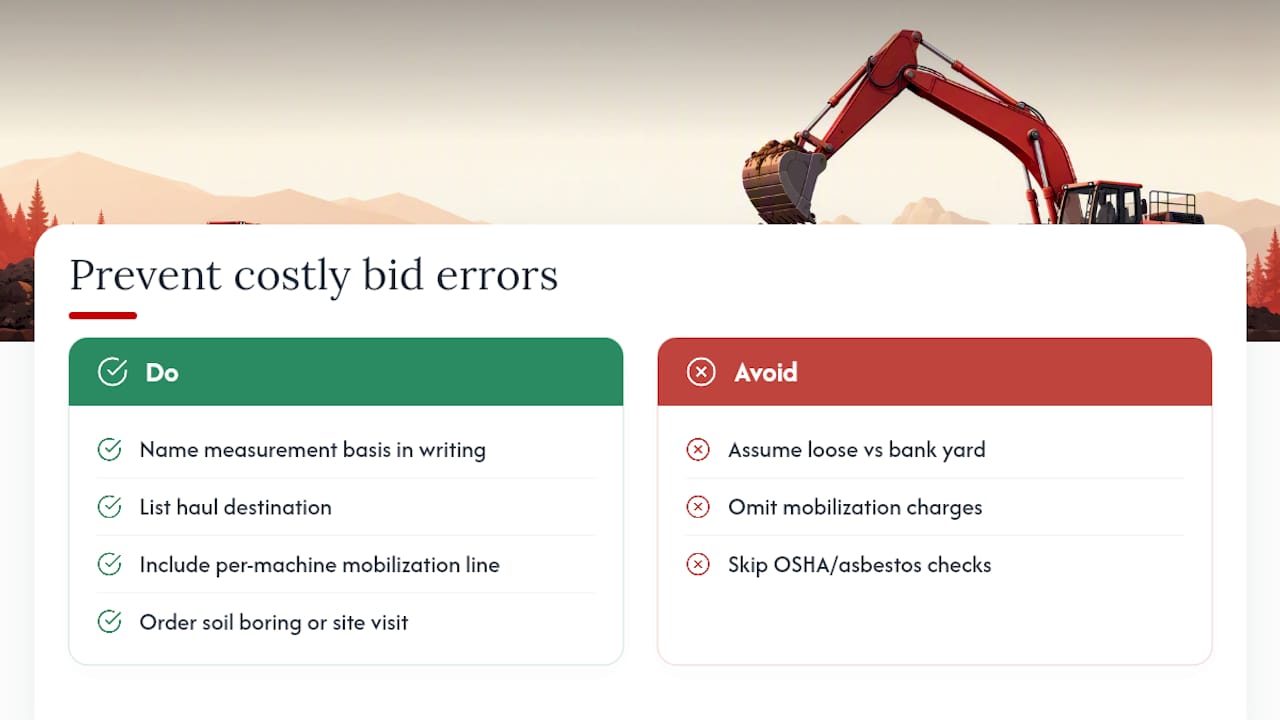
The bid mistakes we see most often on excavation and demolition-linked projects come down to unclear measurement basis. A contractor quotes per bank yard, the client assumes loose yard, and the final invoice comes in 20% to 30% higher than expected purely from that mismatch. Omitted mobilization is the second most common trap, especially when a job needs more than one machine type on site.
OSHA and asbestos abatement certifications matter more than most bids let on, particularly on industrial or older commercial sites where contaminated soil or hazardous materials can quietly turn a routine dig into a compliance problem. Before signing anything, ask for a written scope that names the measurement basis, the haul destination, and a per-machine mobilization line. A soil boring or site visit before the number gets finalized saves both sides from disputes later.
— Zach
When Your Excavation Job Needs More Than a Rental Machine
Some excavation jobs require specialized crews, full equipment fleets, and asbestos abatement certification, beyond what a rental skid steer and a weekend can handle, especially for mass earthwork, industrial foundation excavation, and demolition-linked digs.
If your project involves suspected contamination, deep foundation work, or a site large enough that mobilization costs disappear into the total volume anyway, that’s exactly the kind of job where an experienced crew with a full equipment fleet earns its price. Cornelius Wrecking handles the haul-off coordination and disposal logistics alongside the dig itself, so you’re not managing three separate contractors for one hole in the ground. A site visit and soil boring up front lead to a written scope that states measurement basis and mobilization clearly, no ambiguity to argue about later. If your project fits that description, request an estimate from Cornelius Wrecking and get a site visit scheduled before you finalize your budget.
Tools Worth Checking Before You Sign a Bid
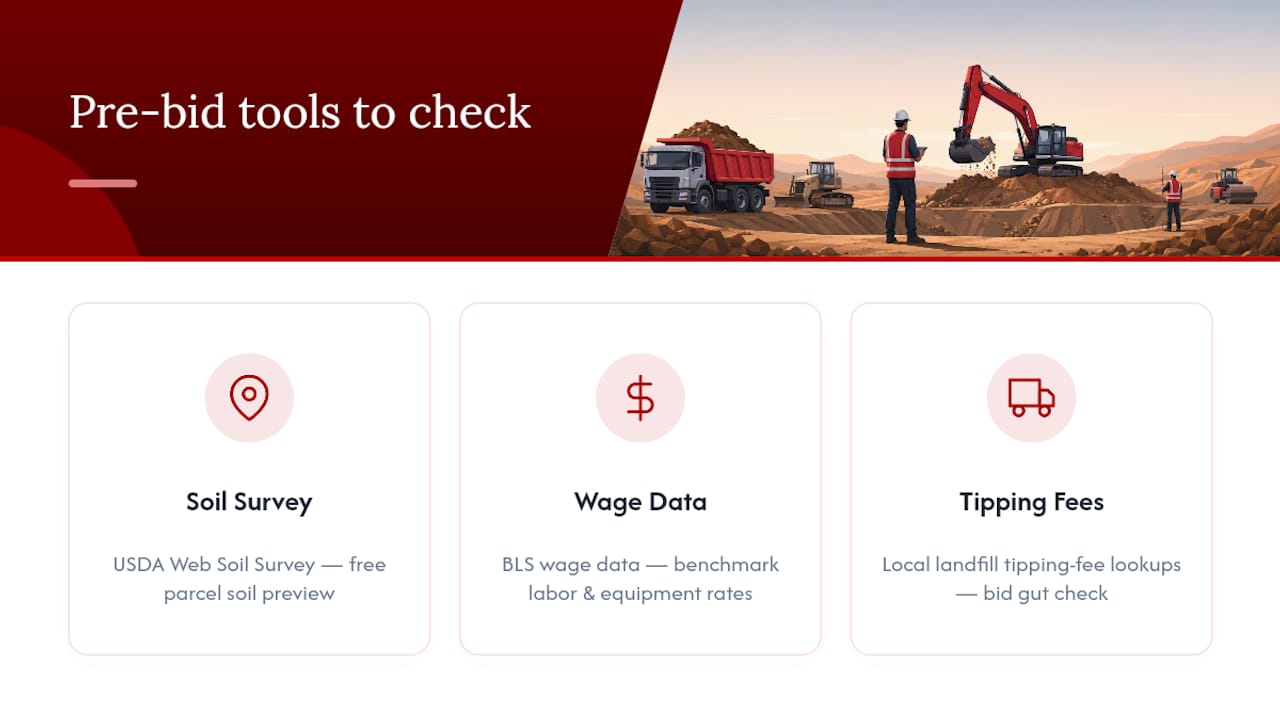
The USDA Web Soil Survey previews likely soil conditions at your parcel for free. BLS wage data benchmarks fair labor and equipment rates. Local landfill tipping-fee lookups round out a solid gut check on any bid.
Sources
- Excavation Cost Per Cubic Yard in 2026: $5 to $25 Real Math | Buildermuse
- How Much Does Excavation Cost? (HomeGuide)
- Excavation costs (Angi)
- Free Excavation Calculator — Grading & Trenching (CostFlowAI)
FAQ
How much does it cost to excavate a yard?
Machine excavation in average soil runs a typical price range for machine excavation in common soil, with wet clay and rock pushing well beyond that depending on method and access.
What is the 2-4-5 rule in excavation?
This isn’t a standard, sourced excavation formula. If you’ve heard it referenced, treat it as informal shorthand rather than an established industry rule, and rely on measured slope ratios and OSHA trench safety standards instead.
How do you calculate excavation cost?
Multiply length by width by depth in feet, divide by 27 for bank cubic yards, apply a 15% to 35% swell factor for hauling, then add mobilization and haul-off charges before dividing the total by your bank yardage.
How much does it cost to dig a 100 foot trench?
It depends entirely on width, depth, and soil type. A narrow utility trench in easy soil might run a few thousand dollars total, while the same length through rock or wet clay with shoring requirements can run several times higher. Get a site-specific quote from a contractor rather than relying on a flat per-foot number.
Is it cheaper to hire an excavation contractor or rent equipment myself?
For small, shallow jobs in easy soil, renting can save money. Once depth, utilities, rock, or hazardous materials enter the picture, hiring a certified contractor like Cornelius Wrecking usually costs less than the risk and hidden fees DIY work can create.
Planning a demolition or excavating project?
Get a fast, no-obligation quote from Cornelius Wrecking.
Request a Quote